


 EN
EN DE
DE CH
CH AT
AT
9-Box Grid: How to Use It for Talent Reviews (Free Template)
 Lisa Puls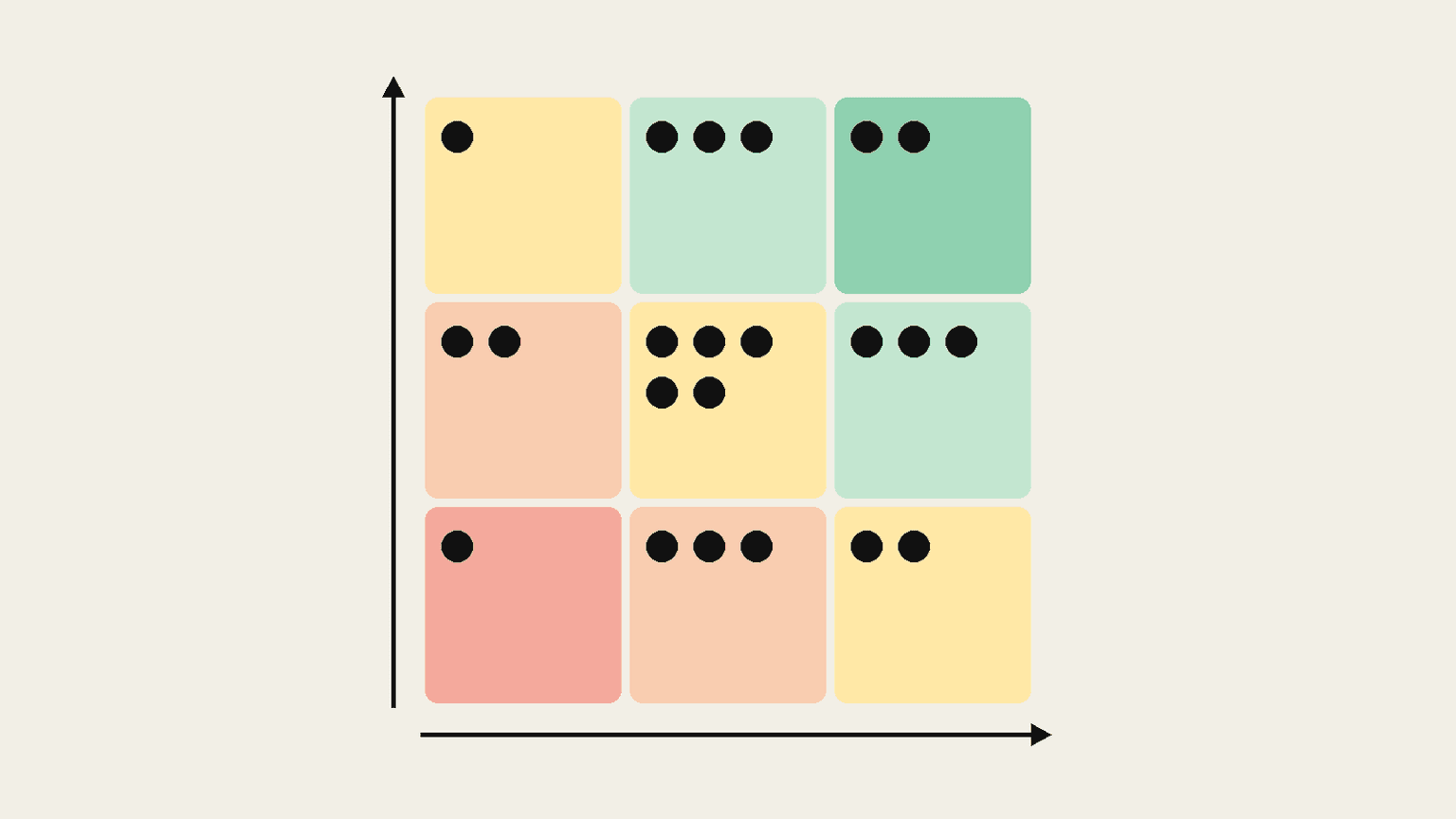
The 9-box grid is one of the most widely used tools in talent management. It places every employee on a simple three-by-three matrix: how well they perform today, and how much potential they have to grow. In one view, leadership teams can see who to develop, who to retain, who is ready for more and where performance needs attention.
This guide explains how the grid works, what each box means, how to run a talent review with it and which mistakes to avoid. You can also download our free 9-box grid template for Excel.
What is the 9-box grid?
The 9-box grid is a matrix with two axes. The horizontal axis shows performance: results and behavior in the current role, usually taken from the last performance review. The vertical axis shows potential: how likely the person is to grow into bigger or more complex roles. Each axis has three levels (low, moderate, high), which creates nine boxes.
The model was adapted from the GE–McKinsey matrix, a 1970s tool for ranking business units by market attractiveness and strength. HR teams use it mainly for succession planning, development decisions and talent reviews.
The nine boxes explained
Names vary between companies. These are the labels our template uses, from the top row (high potential) to the bottom row (low potential):
- Star (high performance, high potential): your future leaders. Retain them, accelerate their development and treat them as succession candidates.
- Growth employee (moderate performance, high potential): ready to grow with stretch assignments and mentoring.
- Rough diamond (low performance, high potential): often new in the role or in the wrong one. Clarify expectations, coach closely and check role fit.
- High performer (high performance, moderate potential): delivers strongly. Recognize them, expand their scope and explore the next role.
- Core player (moderate performance, moderate potential): the backbone of most teams. Develop them in their current role and broaden their experience.
- Inconsistent player (low performance, moderate potential): find the cause, set clear goals and give regular feedback.
- Trusted professional (high performance, low potential): experts who are excellent where they are. Reward them and use them as mentors.
- Effective employee (moderate performance, low potential): solid contributors. Keep them engaged with targeted training.
- Talent risk (low performance, low potential): agree on a performance plan with real support, and consider a role change if it does not work.
How to run a talent review with the 9-box grid
- Define the criteria. Agree in advance what high, moderate and low mean for performance and for potential. Without shared definitions, every manager uses their own scale.
- Rate performance from evidence. Use the results of the last performance review, not a gut feeling.
- Assess potential separately. Look at learning agility, ambition, and how the person handles new and more complex work. Potential is not the same as performance.
- Place employees in the grid. Managers enter a first rating for each person in their team.
- Calibrate. In a calibration session, managers compare their placements side by side and adjust them, so a "high" in one team means the same as in another.
- Agree on actions. Each box comes with a suggested action. Turn them into concrete development plans, succession candidates and follow-ups.
- Share and repeat. Give employees feedback on their development plans (not necessarily their box) and repeat the review once or twice a year.
Common mistakes
- Mixing up performance and potential: a top performer is not automatically a future manager.
- Labels that stick: the grid is a snapshot. Review placements regularly instead of treating them as permanent.
- Bias: recent events, similarity to the manager or visibility in meetings can distort ratings. Calibration and evidence reduce this.
- No follow-up: a grid without development plans is just a chart.
Free 9-box grid template (Excel)
Our template has three sheets: Ratings, where you rate each person from 1 to 3 on performance and potential, Grid, which counts the people in each box automatically, and Boxes, with the label and suggested action for every box. No sign-up needed.
To rate performance consistently first, use our free performance review template. Planning who could step into key roles? Read our guide to succession planning and talent management.
Frequently asked questions
What is the 9-box grid used for?
Mainly for talent reviews, succession planning and development decisions: it shows who is ready for more responsibility, who needs support and where the organization has gaps.
How do you measure potential in the 9-box grid?
With agreed criteria such as learning agility, ambition and the ability to handle more complex work, assessed by the manager and calibrated with other managers. Potential should be judged separately from current performance.
Should employees know which box they are in?
Companies handle this differently. Many share the development plan and the feedback behind it rather than the box itself, because labels can be demotivating out of context.
How often should you update the 9-box grid?
Once or twice a year, usually after the performance review cycle, and whenever there are major changes in a team.

Related Articles

How To Improve Employee Motivation in the Retail Sector
Get an insight into what retail workers, managers, and the human resources team can do to ensure job satisfaction and motivation in retail businesses.

Physical Time Tracking: How Clocking-In Machines Enhance Workplace Efficiency
Methods of employee time tracking have come a long way over the years. Find out how software-integrated clocking-in machines save costs and facilitate compliance.

Agile Working for HR: Streamlining Processes and Enhancing Efficiency
Agile working in HR fosters a people-centric, responsive, and collaborative work environment. By adopting agile practices, HR teams can enhance their own processes and contribute more effectively to the organization's overall success.