

 EN
EN DE
DE CH
CH AT
AT
EU AI Act in HR: Which AI tools are allowed – and which are not?
 Lisa Puls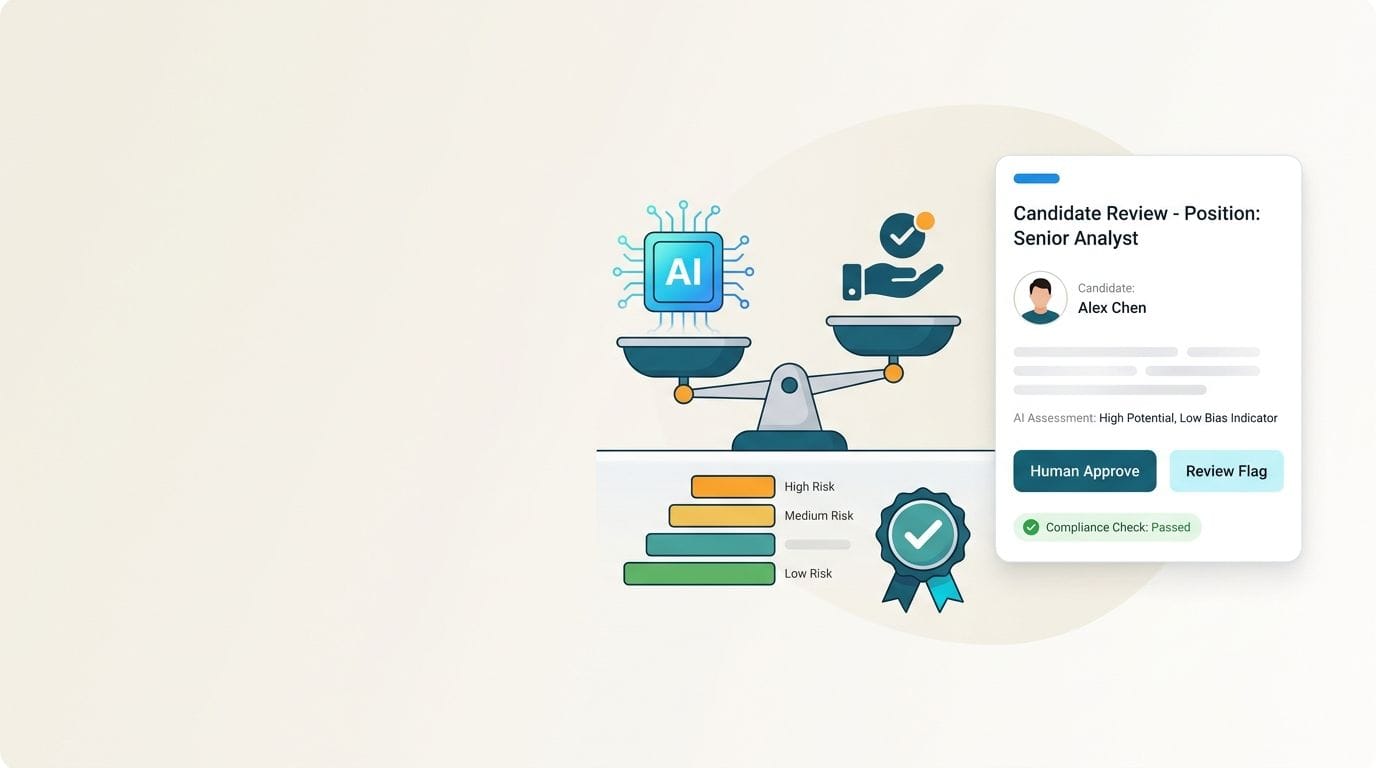
Can ChatGPT be used in recruiting? Will AI-powered candidate rankings still be permitted? And what does the EU AI Act actually mean for HR?
Since the European Union introduced its AI regulation, these questions have become increasingly important for HR teams. At the same time, more and more AI solutions are entering the market, promising to make recruiting, talent management and performance processes more efficient. With growing opportunities come new legal requirements, making it challenging for many organizations to understand where AI can be used safely and compliantly.
The good news is that the EU AI Act does not prohibit the use of artificial intelligence. Instead, it establishes a clear framework for using AI responsibly, particularly in situations where it may influence people and important decisions.
What is the EU AI Act?
The EU AI Act is the world's first comprehensive regulation governing the use of artificial intelligence. Its objective is to encourage innovation while protecting people's rights and ensuring that AI is used responsibly.
Rather than treating every AI application the same, the regulation follows a risk-based approach. The greater the potential impact an AI system may have on individuals, the stricter the legal requirements become.
For HR teams, this distinction is particularly important. After all, HR professionals make decisions every day that directly affect candidates and employees.
Why does the AI Act have such a significant impact on HR?
Whether it's recruiting, promotions, performance reviews or employee development, HR decisions can have a lasting impact on people's careers. That is why the AI Act places particular emphasis on AI systems used in employment-related processes.
If an AI system supports or significantly influences employment decisions, it may be classified as a high-risk AI system. This can include applications that automatically assess applications, rank candidates or generate recommendations for performance evaluations and promotions.
What matters is not whether AI is being used, but how it is used. The key question is how much influence the system has on the final decision.
Which AI applications remain permitted?
Many AI applications that HR teams already use today will continue to be permitted. Examples include:
- drafting job descriptions
- summarizing interview notes
- creating internal communications
- chatbots that answer frequently asked candidate questions
- translation and text improvement tools
These applications support HR teams with administrative tasks rather than making employment decisions. As a result, they generally do not fall under the strictest requirements of the AI Act.
The situation is different when AI actively supports employment decisions. If a system evaluates applications, ranks candidates or provides recommendations for promotions or performance reviews, additional compliance requirements apply.
This does not mean that such solutions are prohibited. Instead, organizations must ensure that AI-assisted decisions are transparent, can be documented and reviewed, and that the final decision always remains with a human.
What does this mean for HR?
For HR teams, the AI Act reinforces one key principle: artificial intelligence should support decision-making, not replace it.
When implementing new AI solutions or continuing to use existing ones, organizations should carefully assess the role AI plays within each process. Is it simply helping with administrative work, or is it influencing employment decisions? Are the results transparent and understandable? Does a human remain responsible for the final outcome?
Addressing these questions early will make it much easier to implement AI responsibly and remain compliant as the regulatory framework continues to evolve.
What organizations should do now
Update (October 2026): The EU has adjusted the AI Act's timeline. Under the Digital Omnibus on AI (Regulation (EU) 2026/1744), the rules for the high-risk AI systems listed in Annex III, which include AI used for recruitment and selection, for decisions on promotion and termination, for allocating tasks and for monitoring or evaluating employees, now apply from 2 December 2027 instead of 2 August 2026. Other parts already apply: the bans on prohibited practices, such as emotion recognition in the workplace, and the duty to take measures for your staff's AI literacy since 2 February 2025, the rules for general-purpose AI models since 2 August 2025, and the transparency obligations since 2 August 2026, for example that a chatbot must make clear to candidates that they are talking to an AI.
Although different parts of the AI Act will apply over time, now is the right moment to review how AI is used across HR processes. A good starting point is to:
- identify all AI applications currently used within HR,
- assess whether they influence employment decisions,
- define clear responsibilities for AI governance, and
- establish processes that ensure transparency and meaningful human oversight.
Organizations should also look beyond functionality when selecting new HR solutions. Understanding how AI is used, how decisions can be documented and whether the system supports compliance should be just as important as the features it offers.
Conclusion
The EU AI Act is not designed to slow down innovation. Instead, it provides a framework for using artificial intelligence responsibly and transparently.
For HR, this means adopting AI with greater awareness and stronger governance. Applications that simplify administrative work will continue to play an important role in modern HR, while AI systems that influence employment decisions require greater transparency, documentation and human oversight.
Organizations that prepare early will not only strengthen compliance but also build trust among candidates and employees in the responsible use of artificial intelligence.
Related Articles
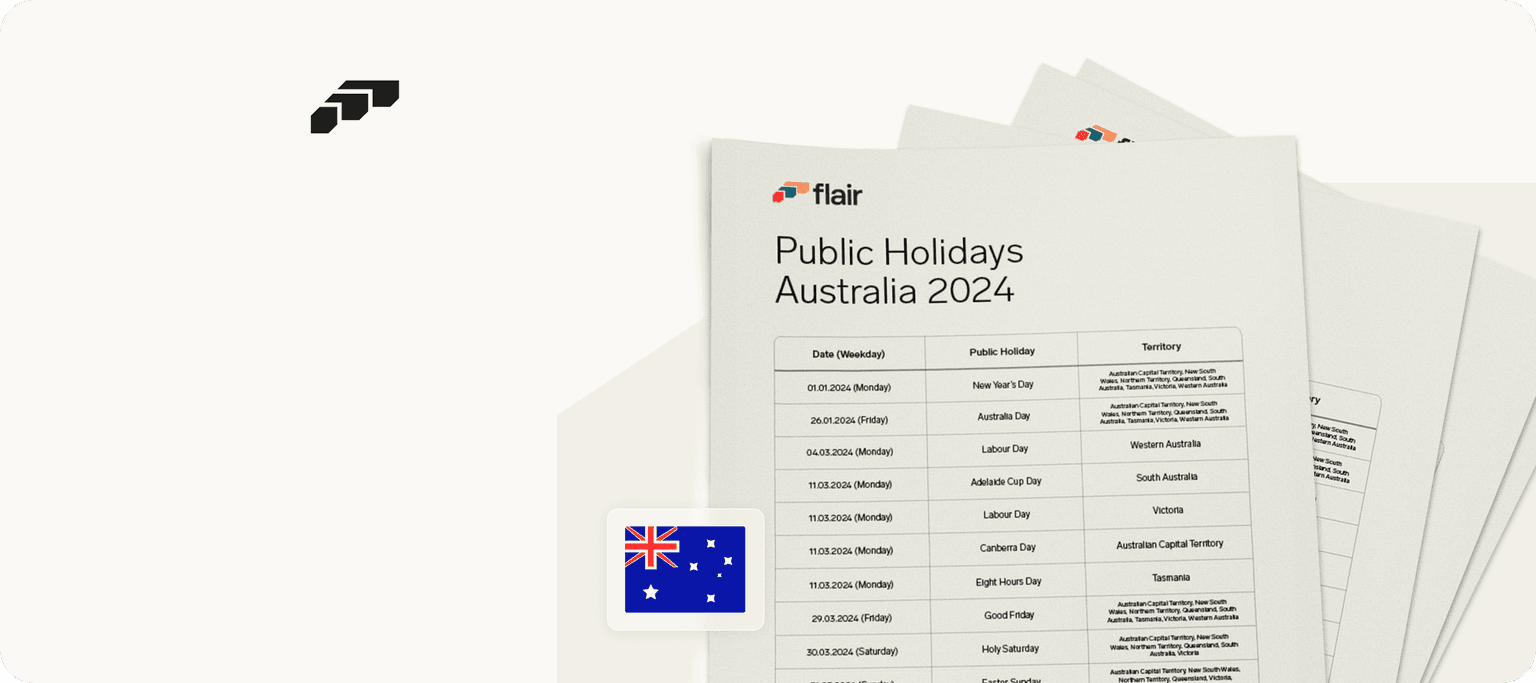
Public Holidays in Australia 2027: Key Dates for HR Teams
For HR professionals in Australia, here's our guide to the 2027 public holidays in every state and territory, including the extra days for Anzac Day and Christmas.


Public Holidays Germany 2027
All statutory public holidays in Germany for 2027, where they apply and how to get the longest stretches off with the fewest vacation days – incl. a PDF calendar.
Pay Bands 2026/2027: How to Build a Fair Salary Matrix – Before It Becomes Mandatory
The EU Pay Transparency Directive means pay must follow objective, gender-neutral criteria — and Germany's slipping timeline is your window to build a fair salary matrix now. A step-by-step guide to pay bands.